Wednesday, June 10, 2020

Boeing loses more 737MAX orders as Cargo demands increase

With the advent of Covid-19 pandemic, Boeing lost more orders of the its 737MAX series. In the month of May they encountered a cancellation of 14 737MAX jets.
Despite the fact that this series was grounded in March 2019 due to the two crashes, the cancellations came from plane-rental companies.

Although the company started its production again in late May, the aircraft will still remain grounded unless Boeing and Federal regulators have announced its air worthiness.
Nevertheless, the cancellations in the month of May added to more than 600 total cancellations for the year 2020.
Boeing 737MAX at Paris Air Show 2017
Source URL: https://commons.wikimedia.org/wiki/File:N7379E_-_Boeing_737_MAX_9.jpg
Source: https://www.flickr.com/photos/clemensv/34610190574/
License URL: https://creativecommons.org/licenses/by/2.0/
Credit: Clemens Vasters | Photographer


Boeing did not deliver any passenger jets in May but delivered two 777 cargo jets, a 767 freighter and a military version of 737 adding to a total of only 60 deliverable aircraft in the year 2020.
It is because of the demand of cargo aircraft during the pandemic that Boeing is able to atleast make up for the losses incurred.

Moreover, Boeing has three different kinds of cargo jets, and also they have been working to convert passenger jets into cargo ones for transporting various goods like medical supplies, protective equipments etc.
Although they have Cargo operations as backup, Boeing said recently that it plans to eliminate nearly 16000 jobs due to depressed demands of air travel.

In Conclusion, while the plane-maker faces a challenge with its passenger jets and specifically its issues with the 737MAX series, so far cargo jets have taken over the driver's seat and probably looks to for months to come.

Monday, June 8, 2020

India to see its new Air India One with state of the art defense systems

India is set to receive two Boeing 777-300ERs which will serve as "Air India One".
These aircraft are intended to fly the Prime Minister, President and other top dignitaries of India from July this year and will replace the current Air India One aircraft i.e Boeing 747.

Currently, Indian officials fly on an Indian Air Force plane for travelling within the country and Air India's Boeing 747 for travelling abroad.

The Boeing 777-300ERs with advanced defense systems will be piloted by none other than the Indian Air Force pilot as per the reports.
This aircraft is comparable to the aircraft used by the President of United States i.e. the Boeing 747-200B series which serve as "Air Force One".

Moreover, the 777s will have a state of the art technological systems in order to corroborate the safety of the aircraft and the officials inside it.

The new "Air India One" will have advanced military defense systems and a reconfigured cabin. Following are the systems embedded in the Boeing 777-300ER which will mark a new era of Air India One:

Large Aircraft Infrared Countermeasures (LAIRCM)
The aircraft is fitted with a Large Aircraft Infrared Countermeasures (LAIRCM) system whose purpose is to defeat the threat missile guidance system by directing a high intensity modulated laser into the missile seeker.
It consists of missile warning sensors (MWS), a laser transmitter assembly, control interface unit (CIU) and number of processors to track, detect, jam and counter incoming infrared missiles.

Self-Protection Suites(SPS)
This technology being a little bit similar to LAIRCM is basically used to effectively jam enemy radar frequencies and divert the heat-seeking missiles.
These suites will not only enable the aircraft to defend the aircraft but also utilize countermeasures during an attack.

These defence systems provided by the United states costed about $190 million.
Nevertheless the aircraft is expected to travel around the globe in one go and will be capable of refueling in mid air as well.
Truely the new Air India One will be an iconic aircraft to travel in.

What do you think about the new Air India One? Would love to know in the comments!

Sunday, June 7, 2020

Aircraft Station Numbers and Zoning - How engineers locate numerous components of an aircraft?

An aircraft has millions of parts functioning simultaneously in a methodical manner. A Boeing 777 for that fact has almost 3 million parts.
It is this marvelous engineering which gets you from one point to the other.
Even if a single tiniest of the part fails to respond at any instant, it can have catastrophic consequences. Thus maintaining and repairing each and every part of the aircraft becomes crucial.
Lets assume a maintenance engineer has figured out which part has failed or which needs some sort of maintenance.
The question here arises how will he locate that specific part in this giant structure?

To answer this, engineers established a method of locating components and reference points on the aircraft.
This was accomplished by establishing reference lines and station numbers for various aircraft components like fuselage, empennage, wing, landing gear etc.
Moreover, the method of zoning was set forth for large aircraft by the Air Transport Association of America (ATA) in ATA-100 Specifications for Manufacturers' Technical Data.

The reference lines and station numbers can be categorized as following:

Fuselage Stations
These include the longitudinal points along the length of the fuselage of an aircraft and are determined by reference to a zero datum line which can be denoted as F.S.(Fuselage Station) 0.00.
This zero datum line is set based on the aircraft manufacturer. Some select the zero datum line ahead of the aircraft as shown below and some can use the wing, engine firewall etc. as the datum line.


These station numbering is given in inches aft or forward of the zero datum line and is negative for stations ahead of the zero datum line and positive for stations behind the zero datum line.

Wing Stations

These are the station points for locating components embedded in the wing hence the name wing stations (WS). These points are measured from the fuselage centre line which is also known as the Butt line (BL).
Similar to Fuselage stations the station numbering is given in inches either to left or right of the butt line.

Water Line
This is used for locating the stations on a vertical line. These station numberings are again given in inches and positive or negative depending upon whether the station is above the butt line or below the butt line.
These are typically used to locate positions of Vertical Stabilizer, Landing gear etc.

Butt Line
As mentioned, it is the fuselage centre line and are used to give locations on the Horizontal Stabilizer and elevator. Similar to wing stations, locations are given in inches either to left or right of the butt line as shown below.

Component Stations

Some components of aircraft have their own station numbering. These can include winglet stations, aileron stations, engine stations etc. and are measured in inches with reference to their own zero datum line.

With regard to Zoning, this is typically done for large aircraft and is indicated by either a major zone, major sub-zone or just zone.
Major Zones are identified as following:

 Major Zone No. 
 Area
 100 Lower half of the fuselage to the rear pressure bulkhead
 200 Upper half of the fuselage to the rear pressure bulkhead
 300 Empennage, including fuselage aft of the rear pressure bulkhead
 400 Power Plants and pylons
 500 Left Wing
 600 Right Wing
 700 Landing Gear and LG doors
 800 Doors
 900 Reserved for uncommon differences between aircraft types.

These major zones are subdivided into major sub zones by adding a non zero number to the tens digit. These are identified as follows:
 Major sub-zone no.
 Area
 310 Fuselage aft of the pressure bulkhead
 320 Vertical Stabilizer and Rudder
 330 Left Horizontal stabilizer and elevator
 340 Right Horizontal stabilizer and elevator

Major sub-zones are finally subdivided into just zones by adding a non zero number to the units digit. These are identified as follows:
 Zones 
 321 Vertical Stabilizer leading edge
 322 Vertical Stabilizer auxiliary spar to front spar
 323 Front spar to rear spar
 324 Rear spar to trailing edge
 325 Lower rudder
 326 Upper rudder
 327 Vertical Stabilizer tip

Conclusion
By using the method of station numbering and zoning for the components of the aircraft it is easier for a Maintenance engineer to locate its position, do the required repair or maintenance and ultimately save time and money.

Friday, June 5, 2020

Boeing focus on lining 777X and 787 as it resells off the jets once designated for a Russian cargo carrier

A dispute arose between Boeing and a Russian cargo carrier Volga-Dnepr over an order for a 747 jumbo freighter and three large 777 freighters having a total worth more than $600 million at standard pricing.

Volga-Dnepr filed a suit last week in Federal court in Seattle claiming that Boeing had not delivered the four jets and had intended to resell them to another buyer.
Volga-Dnepr alleges that Boeing has kept more than $146 million as advance payment while taking money from the new buyers too and thus seeks an injunction to stop Boeing from selling the planes.
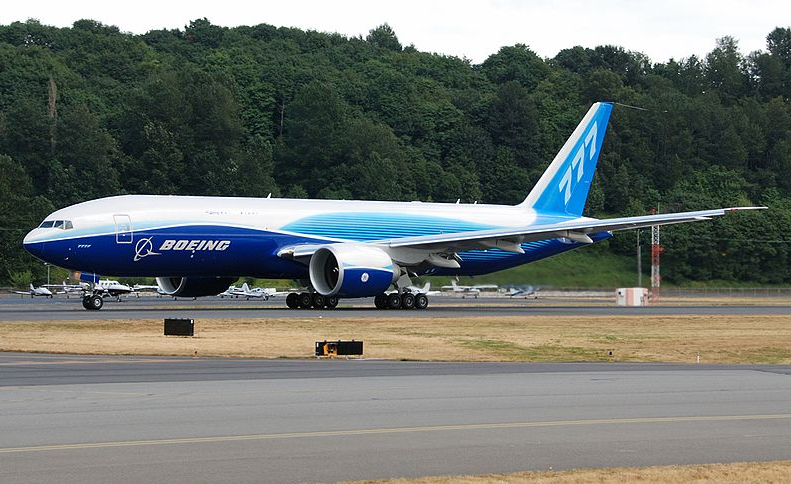
Boeing 777 Freighter
Source URL: https://commons.wikimedia.org/wiki/File:Boeing_777_Freighter_test_flight.jpg
Source:https://www.flickr.com/photos/42809587@N00/2719106712
License URL: https://creativecommons.org/licenses/by-sa/2.0/
Credit: Andrew W. Sieber | Photographer


How this started?
This standoff between the two developed earlier this year when the Russian cargo carrier Volga-Dnepr told Boeing that they couldn't secure financing for their orders due to Covid-19 pandemic.

On 17th January, Volga-Dnepr informed Boeing to rescind the purchase agreement and they sent another letter to Boeing on 22nd January notifying that they "could not fulfill its contractual obligations".
These letters conveyed to Boeing that the orders were definitively cancelled.

Later, Volga-Dnepr managed to secure financing for the four aircraft as the demand for large freight aircraft increased in early April.
They revoked their earlier statement and declared themselves ready to take delivery of 747 Freighter on 13th April.
But much to their horror, they realized that Boeing was reselling those aircraft to another buyer, for which Volga-Dnepr thus filed a suit last week in Federal court in Seattle.

In response to the allegation imposed, Boeing asserts that Volga-Dnepr “literally walked away from two purchase agreements with Boeing back in January and February of this year ― one for 747-8Fs and the other for 777Fs.”
Moreover Boeing said that a meeting in London was held on 11th February where-in Volga representative Tatiana Arslanova told Boeing and a leasing company to "re-market and re-sell the 777 Freighter because Volga will not be taking delivery."

It can be clearly seen that the letters sent earlier in the month and statement given by Tatiana Aslanova are two evidences which are against Volga-Dnepr.
Boeing is confident that Volga is using the pandemic as a cover for its financial failings, claiming that from 2016 onward, it had “repeated problems obtaining financing that prevented it from adhering to the contractual delivery schedules for airplanes under contract.”

Boeing finalized to resell the 747 Freighter which Volga-Dnepr refused and had scheduled delivery of the plane to UPS on 4th May.

On Tuesday, Chief Judge Ricardo Martinez denied the restraining order by Volga, giving Boeing an initial victory and noting that Volga “has not demonstrated a likelihood of success on the merits of its breach of contract claim.”

While this situation continues to be a point of discussion, Boeing has novel customers to take the 777Xs and 787s.
As the aviation industry is hit severely due to pandemic, consequently Boeing's order backlog has grown by more than 500 planes. Hundreds of 737Max orders were cancelled amid Covid-19 and now a deal for 777Xs and 787s will surely boost the morales of the jet-maker.

What are your thoughts on the dispute between Boeing and Volga-Dnepr and how do you see the Boeing company going forward with its novel 777X?


Thursday, June 4, 2020

Aviation Fact-1: Pilots eat different meals!

Believe it or not, the in-flight meals served to both the captain and co-pilot are different.
As strange as it sounds, this is done so as to prevent a situation where-in both the captain and co-pilot becomes sick possibly due to food poisoning.

With serving two different meals, there is an assurity that in case one of the meals cause food poisoning, the other pilot is safe and is able to fly the aircraft.

There is a possibility that either both pilots will receive altogether a different meal from the rest of passengers, or based on hierarchy. This means the captain will be served with first-class meal and the co-pilot will be served with business-class meal.

Nevertheless, this is not an incongruous step reason being, it assures safety of the passengers because if a situation arises where both pilots become sick then consequences can be catastrophic.

What are your thoughts about pilots have different meals?

Wednesday, June 3, 2020

Delta Airlines retire MD88 and MD90 amid Coronavirus

US based carrier, Delta Airlines retired one of their obsolete aircraft - the MD88 also known as the "Mad Dog" and MD90 of McDonnell Douglas on 2nd June.

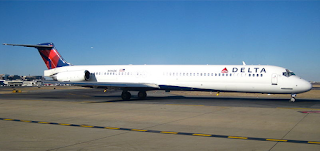
Delta Airlines MD88
Source URL:https://commons.wikimedia.org/wiki/File:Delta_MD-88_N915DE.jpeg
Source: https://www.flickr.com/photos/rudiriet/3272783944/
License URL: https://creativecommons.org/licenses/by-sa/2.0/
Credit: Rudi Riet | Photographer.


These aircraft served for nearly 34 years during their operation with Delta Airlines.
Initially the carrier had planned to retire the McDonnell Douglas MD88 by the end of this year and MD90 by end of 2022, they were forced to retire it now due to declining air travel amid Covid-19.

The final flights of MD88 and MD90 arrived at the carrier's hub of Atlanta Hartsfield International Airport on the morning of 2nd June which took off from Washington-Dulles International Airport and George Bush Intercontinental Airport in Houston respectively.

Derivatives of the DC-9 developed in the 1960’s, the 149-seater MD-88 entered the carrier's fleet in 1987.
Its better variant, 158-seat MD-90 following seven years later came into service with Delta Airlines.
At the height of their usage, in 2014, MD88 and MD90 accounted for more than 50% of all departures from Atlanta.

With their retirement, came an end to the era of McDonnell Douglas name, the company that Boeing acquired in 1997.

Moreover, the pandemic also prompted the carrier to ground more than 600 planes and retire a number of its older jets early.
Delta Airlines is expected to retire its 18 Boeing 777 fleet by the end of this year as well.

Its true that amid the pandemic, with the passenger air transport industry severly hit, carriers across the globe were prompted to reassess their fleet requirements and shift to modern, fuel-efficient aircraft.

What are your thoughts on the retirement of McDonnell Douglas MD88 and MD90?

Monday, June 1, 2020

Airbus to trim down plane production further?

With the pandemic still residing around the globe, Airbus looks to trim down its plane production further as airlines face shortage of funds.

In the month of April, Airbus slashed its top selling A320-series production by as much as one-third for one or two quarters to cope with the negligible demand from airlines that have parked planes because of the virus.
Without a vaccine, the confidence in flying could remain depressed for sometime. Although, recently Airbus live streamed on Facebook explaining on how the air would be re-circulated every 2-3 minutes. A basic idea of how it works is that the air in cabin is made of two parts, half of which goes out of the aircraft and replaced by fresh air from outside and gets heated.
The other half undergoes re-circulation which goes through HEPA filters and through it fresh air (more than 99.9%) comes in the cabin. Further details can be seen on the Airbus' Facebook page.

Nevertheless, corporations are finding out ways and means to how things can get back to normal.

Coming back, despite the popular A320-series accounts for the bulk of production and inflow of funds, Airbus only managed to handover 12 models in the month of April.
Moreover, under wide-body category, one A350-900 and one A330CEO was delivered only.
Ultimately, the backlog of aircraft remaining to be delivered as of 30th April stood at 7,645, which comprised of 6,217 A320 Family aircraft, 529 A220s, 322 A330s, 568 A350 XWBs and nine A380s.

Looking at these numbers it is imminent that Airbus will have to trim their plane production further and as this happens the consequence will be the elimination of jobs further.

Its true this is the sharpest downturn ever in aviation industry. Although, looking at the current situation, it will take atleast an year for the aviation industry to get back to normal.
It can be expected by 2022, the manufacturers will be able to increase their production rates and clear their backlog. However, this is a very speculative assumption.

When do you think will the aviation industry get back to normal? Would love to know from you in the comments!